
sound
understanding sound & the nervous system
In a world filled with constant noise, performance, and stimulation, finding true quiet can feel surprisingly difficult. When you attend a sound session with me, you won’t find dramatic light displays, complex musical concertos, or energetic posturing.
There is no performance to watch, no narrative to follow, and nothing you need to achieve or “heal.”
Instead, sound is used simply as an anchor, a gentle, acoustic boundary that allows your nervous system to unhook, de-escalate, and return to its own natural baseline.
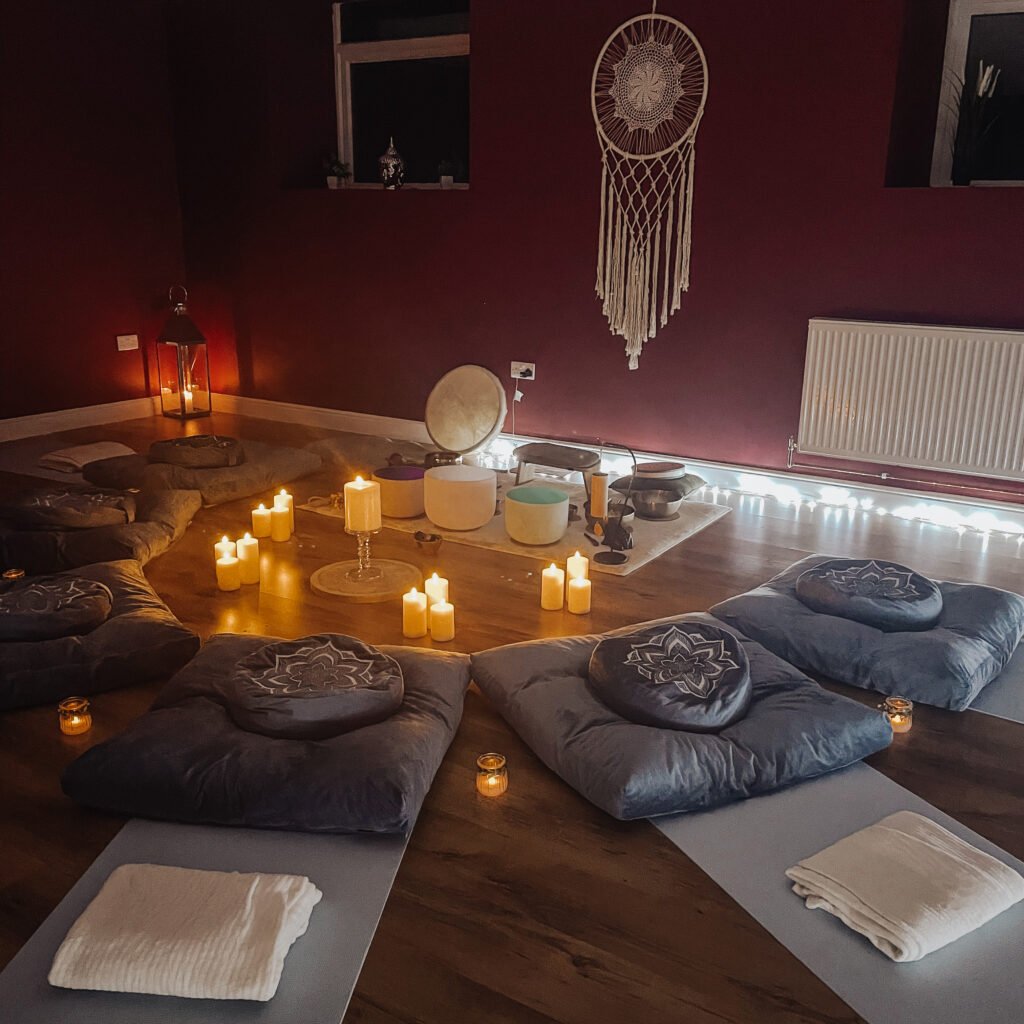

how sound affects the body
We often think of sound as something we hear with our ears, but sound is physical vibration. When acoustic instruments are played softly and intentionally, their vibrations interact directly with your physical body and nervous system.
Here is why a simple, unhurried sound space works:

1. It gives the analytical mind a rest
The brain is hardwired to track, evaluate, and predict. When sound is overly complex, melodic, or structured like a concert, the mind stays slightly “online” to follow the music. By using continuous overtones such as the natural, lingering vibrations of hand-hammered singing bowls, simple drumming, and organic instruments, the sound becomes a landscape rather than a song. With no melody to track, the thinking mind gradually gives up its effort to monitor the room and drops its guard.
2. It Signals Safety
Your nervous system reads predictability as safety. A steady, gentle acoustic pulse mimics baseline biological rhythms, like an unhurried breath or a calm heartbeat. This subtle acoustic environment signals to the primitive brain that there is no threat, nothing to react to, and no demand on your attention.


3. The Power of Space and Silence
The most meaningful part of any sound session isn’t actually the instrument itself, it is the quiet space between the sounds. Silence allows your system time to integrate what it feels. Without the urge to fill every second with noise or performance, the space remains spacious, calm, and uncluttered.
rest over entertainment
It’s easy for modern sound baths to feel like small concerts. While sensory spectacle can be entertaining, a hypervigilant or exhausted nervous system doesn’t need more input to consume, it needs less.
When you strip away the theatre, something quiet happens:
The mind stops looking outward for a show and begins to settle inward.
The body stops trying to process external stimulation and relaxes into somatic presence.
You are given complete permission to simply be, without being asked to fix, change, or heal anything.
what to expect in a session

My role in the room is not to “heal” you or put on a show, but simply to hold a steady, grounded container where your body can do what it already knows how to do: settle and balance itself.
You will lie down comfortably in an unhurried, quiet space. The sound of Tibetan bowls, gentle percussion, and natural instruments will wash over the room, not as a performance to listen to, but as an invitation for your whole system to rest.