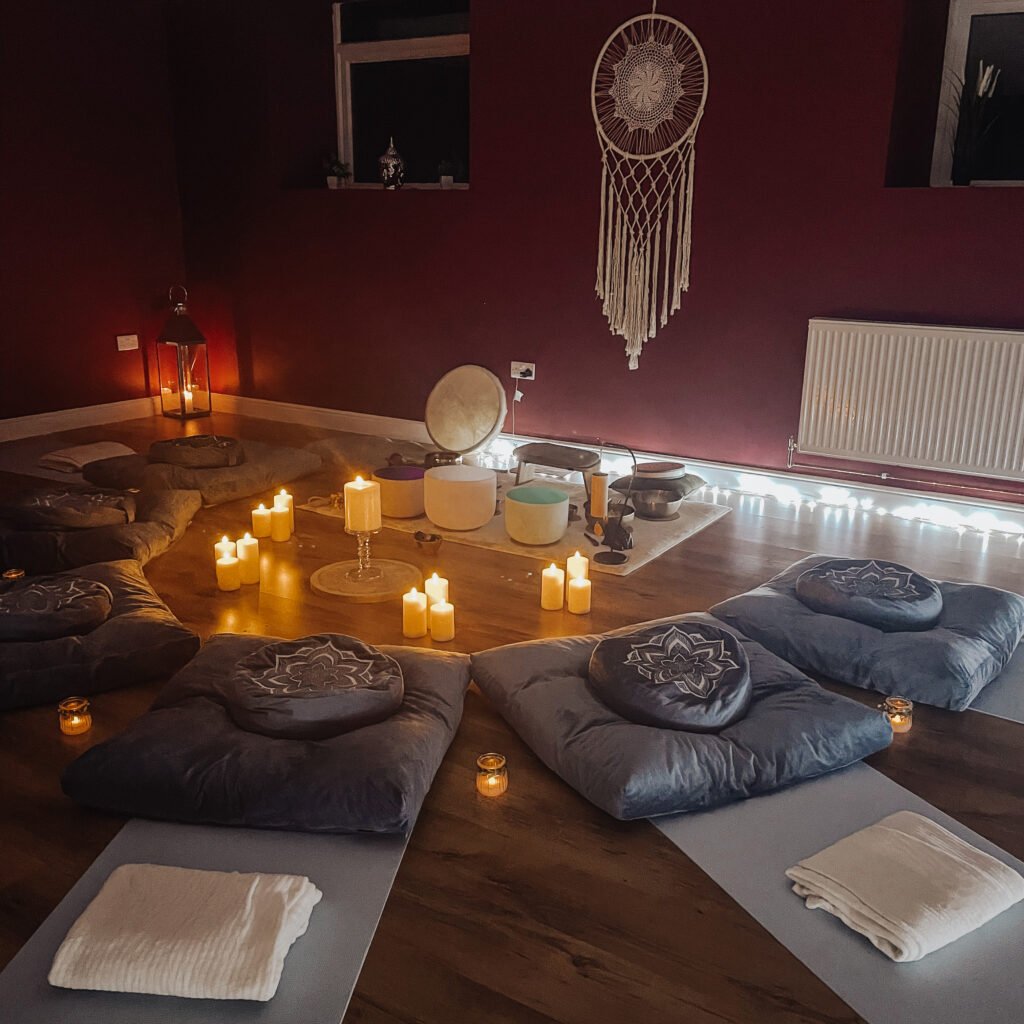
Effortless meditation
A practice in awareness
The meditation offered here is a grounded, embodied practice rooted in rest, awareness, and integration.
Rather than approaching meditation as something to do in order to reach a particular state, this work begins with allowing the body and nervous system to settle into their own intelligence. The emphasis is not on fixing, healing, or improving experience, but on learning how to remain present with experience as it unfolds, without striving, control, or self-monitoring.
This is a practice for those who sense that clarity and freedom are not found through effort or peak experiences, but through a deeper capacity to rest in awareness itself. Attention is gently guided toward breath, body, thoughts, and emotional tone, not to analyse or change them, but to recognise how they arise and pass within a wider field of awareness. From here, awareness is invited to rest openly, allowing experience to move without interference.
Over time, this approach supports both nervous system stability and insight. Reactivity softens, presence becomes more embodied, and awareness is no longer something to attain, but something already here to be trusted. The practice is simple, subtle, and non-performative, offering a steady ground for those drawn to meditation as a living, integrating path rather than an experience to pursue.
sound-supported meditation
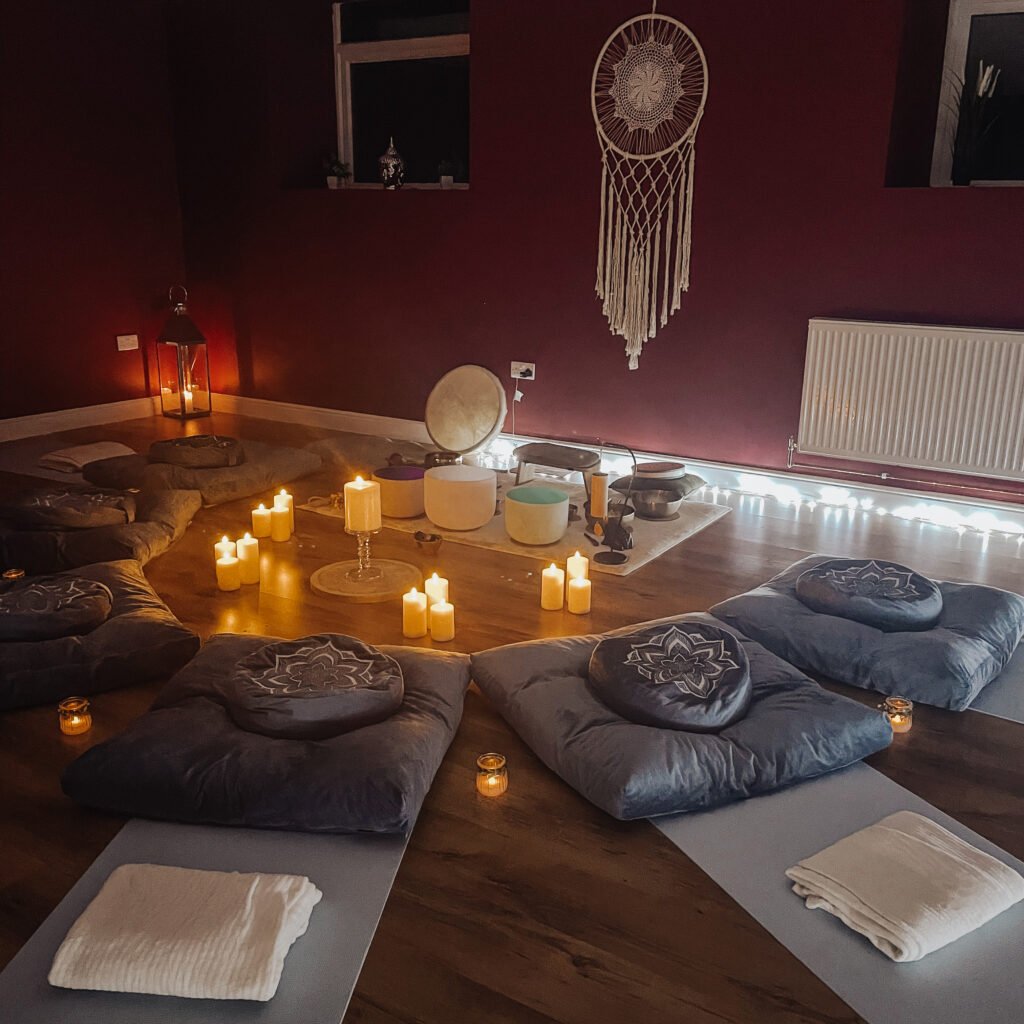
This is a guided meditation class that begins with gentle sound to support settling and arrival, and then moves into a grounded, embodied meditation practice.
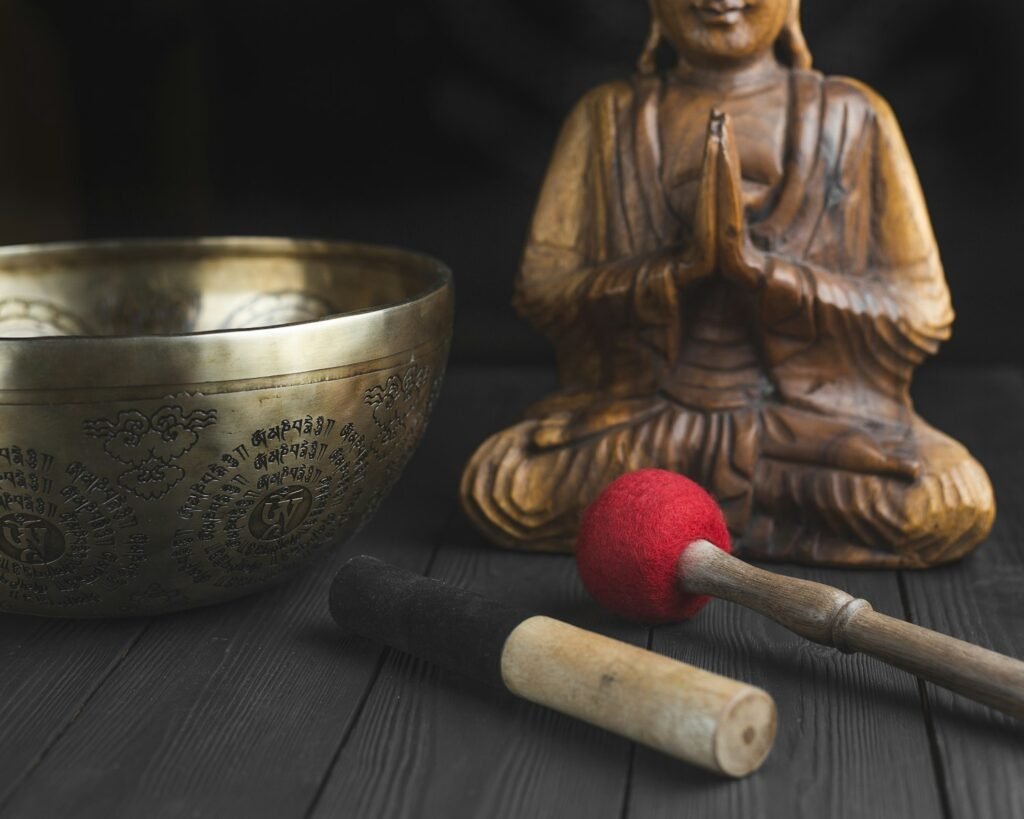
The session begins with a gentle bathing in the sound of Himalayan singing bowls to help the nervous system soften and orient. From there, the focus is on meditation itself, cultivating awareness of breath, body, and present-moment experience in a way that is steady, accessible, and kind.
The practice supports both grounding in direct experience and resting in a wider field of awareness, allowing attention to settle naturally rather than through effort.
What A session is like
Each session follows a simple, consistent rhythm, offering a sense of safety and ease.

opening ritual & Arriving with Sound (15 minutes)
The class begins with the slow, gentle playing of Tibetan singing bowls.
This opening period supports:
You are welcome to rest, listen, or simply notice how sound is experienced—without needing to follow it or do anything with it.
Guided Meditation/ Contemplation (30 minutes)
After the sound, the practice moves into guided meditation/contemplation.
Guidance may include:
At times, attention is invited into specific aspects of experience; at other times, it is encouraged to rest more openly. This allows the practice to be both grounding and spacious, supporting clarity without strain.
Closing ritual, Reflection and Integration (15 minutes)
The session closes with time for integration.
This may include:
Silence is always welcome.
how this practice is held
Nothing is forced or analysed. There is no expectation to feel calm, clear, or peaceful. This practice can often be met with feelings and emotions within a wider field of experience. Whatever arises is met gently, as part of a shared field of awareness. You are always welcome to lie down, sit upright, or move as needed. Meditation here is an invitation, not a direction.
This class unfolds gradually and may include:
THE ROLE OF AWARENESS IN THIS PRACTICE
The meditation offered here is rooted in direct, lived experience.
Attention is guided toward breath, body, thoughts, and emotions, not to analyse or change them, but to notice how they move and unfold. Over time, this can help reduce reactivity and build trust in one’s own capacity to be present.
Alongside this, there are invitations to sense the wider field of awareness that already holds experience. This allows moments of ease and rest, where awareness does not need to be narrowed or controlled.
Together, these aspects of practice support:
Grounding in the body
A softer relationship to thoughts and emotions
A sense of steadiness and openness that can carry into daily life
the role of sound
Sound is used intentionally and sparingly at the beginning of each class.
Tibetan singing bowls and gentle instruments are played slowly, with space and silence between sounds. Their purpose is to support settling and orientation, helping attention arrive more easily in the present moment.
Once the sound concludes, it is set aside so the meditation can deepen in stillness and awareness.
Who this practice may support
This class may be supportive to:
No prior meditation experience is needed.
ABOUT THE FACILITATOR
I am a meditation teacher with a focus on grounding, embodiment, and integration.
I studied the two-year Mindfulness Meditation Teacher Certification Program with Jack Kornfield and Tara Brach and have a long history of my own meditation practice. My teaching is rooted in vipassana meditation and informed by non-dual understanding, with a practical emphasis on helping awareness land in the body and in lived experience.
My intention is to offer meditation in a way that feels gentle, steady, and supportive, particularly for those who feel inwardly busy, sensitive, or in need of grounding.

Trauma-Informed and Choice-Led
Choice is always prioritised
You are free to move, rest, or step out at any time
Nothing is imposed or required
Meditation here is about safety, agency, and kindness towards your own experience.
this is An invitation for you…
To Pause
To Breathe
To Be Exactly As You Are
Meditation here offers a way to rest without effort, to be present without striving, and to discover that awareness is already here, quietly holding everything.
Where are we?
The Womb, SOUL WELLNESS HUB, Burnley Road, Sowerby Bridge. HX6 2TL.
Every Wednesday 7-8pm